Navigating CRM system pricing can feel like decoding a secret language. With so many plans, tiers, and hidden costs, it’s easy to overspend or underutilize. Let’s break down the real numbers, models, and strategies to help you choose wisely.
Understanding CRM System Pricing Models

CRM system pricing isn’t one-size-fits-all. Different vendors use different models, and understanding them is the first step to making a smart investment. Whether you’re a startup or an enterprise, knowing how you’ll be charged helps avoid surprises down the line.

Subscription-Based Pricing
This is the most common CRM system pricing model today. Vendors charge a recurring fee—usually monthly or annually—per user. It’s predictable, scalable, and ideal for businesses that want flexibility.
- Most vendors like Salesforce and HubSpot use this model.
- Annual contracts often offer 10–20% discounts compared to monthly billing.
- Subscription models allow easy scaling up or down based on team size.
However, long-term costs can add up, especially as your team grows. A $20/user/month plan for 50 users becomes $12,000/year—before add-ons.
Per-Feature Tiering
Many CRM platforms use tiered pricing where features are locked behind increasingly expensive plans. The basic plan might include contact management, while advanced automation or AI tools require a premium upgrade.
- For example, Zoho CRM offers free, standard, professional, and enterprise tiers.
- Businesses often start small but hit feature ceilings quickly, forcing upgrades.
- This model encourages upselling but can lead to paying for unused tools.
“The real cost of a CRM isn’t the sticker price—it’s the features you don’t need but are forced to buy.” — CRM Industry Analyst, 2023
Flat-Rate and Enterprise Licensing
Some vendors offer flat-rate pricing for unlimited users, which can be cost-effective for large teams. Others provide custom enterprise licensing with negotiated contracts.
- Flat-rate models are rare but exist—like Insightly’s Project Management plan at $99/month for unlimited users.
- Enterprise deals often include dedicated support, SLAs, and integration services.
- These require direct sales contact and can take weeks to finalize.
This model benefits large organizations but lacks transparency. Always request a detailed quote and compare total cost of ownership (TCO).
CRM System Pricing: Key Cost Factors You Can’t Ignore
Beyond the base price, several hidden or overlooked factors influence the true cost of a CRM system. These can double your initial estimate if not planned for.
User Licenses and Seat Costs
Per-user pricing is standard, but costs vary wildly. Entry-level CRMs charge $10–$15/user/month, while enterprise platforms like Salesforce can exceed $300/user/month.
- HubSpot CRM starts free, but its Sales Hub Professional is $450/month for 5 users ($90/user).
- Microsoft Dynamics 365 charges $95/user/month for Sales Professional.
- Some vendors offer team plans with volume discounts.
Pro tip: Audit how many users actually need full access. Use read-only or light licenses for employees who only view data.
Implementation and Onboarding Fees
Many businesses forget that setup isn’t free. Implementation includes data migration, customization, training, and integration.
- Basic onboarding might cost $1,000–$5,000.
- Complex deployments with third-party consultants can exceed $50,000.
- Vendors like Salesforce offer free training resources, but hands-on help costs extra.
According to Gartner, implementation often accounts for 40–60% of total CRM costs in the first year.
Integration and API Costs
Your CRM doesn’t work in isolation. Connecting it to email, marketing tools, ERP, or e-commerce platforms requires integration.
- Native integrations (e.g., Gmail, Slack) are usually free.
- Custom API usage may incur charges, especially with high-volume data syncs.
- Platforms like Zapier add a middle layer, costing $20–$100/month on top of CRM fees.
Always check API rate limits and data transfer fees. Some CRMs throttle performance on lower tiers.
Top CRM Platforms and Their Real-World Pricing
Let’s examine how CRM system pricing plays out across leading platforms. We’ll break down actual costs, not just marketing claims.
CRM System Pricing – CRM System Pricing menjadi aspek penting yang dibahas di sini.
Salesforce: The Enterprise Benchmark
Salesforce dominates the CRM market but comes with a premium price. Its CRM system pricing is complex, with multiple clouds and editions.
- Sales Cloud Essentials: $25/user/month (billed annually).
- Sales Cloud Professional: $75/user/month.
- Sales Cloud Enterprise: $150/user/month.
- Unlimited and Custom editions exceed $300/user/month.
Add-ons like Einstein AI or Service Cloud increase costs significantly. A mid-sized company (50 users) on Professional edition pays $45,000/year—before implementation.
HubSpot: Scalable for SMBs
HubSpot offers a freemium model that’s attractive to startups. But as you scale, CRM system pricing rises fast.
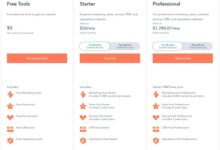
- Free CRM: Unlimited users, basic features.
- Sales Hub Starter: $18/user/month (min 1 user).
- Sales Hub Professional: $450/month for 5 users ($90/user).
- Sales Hub Enterprise: $1,200/month for 10 users ($120/user).
The jump from Starter to Professional is steep. However, HubSpot bundles marketing, sales, and service tools, offering value through integration.
Zoho CRM: Budget-Friendly Powerhouse
Zoho CRM is known for affordability without sacrificing features. It’s ideal for small to mid-sized businesses.
- Free plan: Up to 3 users.
- Standard: $14/user/month.
- Professional: $23/user/month.
- Enterprise: $40/user/month.
Zoho also offers a one-time perpetual license for on-premise deployment (rare in modern CRM). At $1,140/user, it’s expensive upfront but eliminates recurring fees.
Hidden Costs in CRM System Pricing
The listed price is just the tip of the iceberg. Many businesses underestimate the total cost because they overlook these hidden expenses.
Customization and Development
Every business has unique workflows. Custom fields, automation rules, and branded portals require development time.
- Simple customizations: $500–$2,000.
- Complex workflows or approval chains: $5,000–$20,000.
- Ongoing maintenance adds 15–20% annually.
Low-code platforms reduce costs, but highly tailored solutions need developer expertise.
Data Migration and Cleanup
Moving data from spreadsheets or legacy systems isn’t trivial. Poor data quality leads to duplicates, inaccuracies, and failed automation.
- Manual migration: Time-intensive and error-prone.
- Automated tools: $500–$3,000 depending on volume.
- Data cleansing services: $1,000–$10,000 for large datasets.
According to Nucleus Research, companies with clean data see 2.3x higher ROI from CRM investments.
Training and Adoption Costs
A CRM is only as good as its users. Poor adoption leads to wasted spending.
- Internal training: 10–20 hours per employee.
- External consultants: $150–$300/hour.
- Lost productivity during onboarding: Hard to quantify but real.
Invest in change management. Use in-app guides, video tutorials, and gamified learning to boost engagement.
How to Choose the Right CRM Based on Pricing
Price shouldn’t be the only factor, but it’s a critical one. Here’s how to align CRM system pricing with your business needs.
Assess Your Business Size and Growth Trajectory
A 5-person startup has different needs than a 500-person enterprise. Choose a CRM that scales with you.
CRM System Pricing – CRM System Pricing menjadi aspek penting yang dibahas di sini.
- Startups: Prioritize low entry cost and ease of use (e.g., Zoho, HubSpot Free).
- SMBs: Look for mid-tier plans with automation and reporting (e.g., Freshsales, Pipedrive).
- Enterprises: Need security, compliance, and API access (e.g., Salesforce, Microsoft Dynamics).
Forecast user growth. A plan that’s cheap at 10 users may be unaffordable at 100.
Map Features to Business Goals
Don’t pay for features you won’t use. Align CRM capabilities with your objectives.
- Sales teams: Focus on lead scoring, pipeline management, and email tracking.
- Marketing teams: Need segmentation, campaign analytics, and landing pages.
- Customer service: Require ticketing, knowledge base, and SLA tracking.
Create a feature checklist and rank them by importance. Eliminate platforms that lack core functionalities.
Negotiate and Leverage Free Trials
Never commit without testing. Most CRMs offer 14–30 day free trials.
- Use trials to test performance, usability, and integration.
- Ask for extended trials if needed—vendors often comply.
- Negotiate pricing, especially for annual contracts or large teams.
Tip: Mention competitor pricing during sales calls. Vendors may match or beat offers to close the deal.
Free vs. Paid CRM: Is Free Really Free?
Free CRMs like HubSpot, Zoho, and Freshworks attract budget-conscious businesses. But are they truly cost-free?
Limitations of Free CRM Plans
Free tiers come with restrictions that can hinder growth.
- User limits (e.g., Zoho: 3 users, HubSpot: unlimited but limited features).
- Reduced automation (e.g., only 1,000 emails/month).
- No phone support or SLAs.
- Branding (e.g., “Powered by” footers in emails).
These limitations force upgrades as your business scales. The real cost is delayed investment, not savings.
When Free CRM Makes Sense
Free CRMs are ideal for specific scenarios.
- Early-stage startups validating their model.
- Solopreneurs or freelancers managing a small client list.
- Teams testing CRM concepts before company-wide rollout.
Use free CRMs as a sandbox. But plan your upgrade path early to avoid data silos.
The Long-Term Cost of Free Tools
Free tools often lack APIs, audit logs, and compliance features needed for growth.
- Migrating from free to paid can be complex and costly.
- Data export limitations may require manual re-entry.
- Lack of support increases downtime risk.
A $0/month tool costing 10 hours of IT time weekly equals $20,000/year in labor. That’s not free.
Future Trends in CRM System Pricing
The CRM pricing landscape is evolving. Stay ahead by understanding emerging trends.
AI-Powered Features and Premium Pricing
AI is becoming a standard differentiator—and a cost driver.
- Salesforce Einstein, HubSpot AI, and Zia by Zoho add $20–$50/user/month.
- Features include predictive lead scoring, email summarization, and chatbot automation.
- Vendors bundle AI in higher tiers, pushing users to upgrade.
AI delivers ROI, but only if used effectively. Avoid paying for AI that sits idle.
CRM System Pricing – CRM System Pricing menjadi aspek penting yang dibahas di sini.
Usage-Based and Consumption Models
Some vendors are shifting from per-user to per-activity pricing.
- Charging per email sent, API call, or automation trigger.
- Similar to cloud computing (e.g., AWS).
- Benefits businesses with fluctuating workloads.
This model rewards efficiency but can be unpredictable. Monitor usage closely to avoid bill shocks.
Open Source and Self-Hosted CRM Options
For maximum control and cost predictability, some companies opt for open-source CRMs.
- Examples: SuiteCRM, Odoo, EspoCRM.
- No licensing fees, but require in-house IT or hosting costs.
- Hosting on AWS or Azure: $100–$500/month depending on scale.
These offer transparency but demand technical expertise. Best for organizations with development teams.
What is the average cost of a CRM system?
The average CRM system pricing ranges from $10 to $200 per user per month. Small businesses typically spend $50–$200/month, while enterprises can pay $50,000+ annually including implementation and customization.
Are there any truly free CRM systems?
Yes, several CRMs offer free plans (e.g., HubSpot, Zoho, Freshsales), but they come with limitations in users, features, or support. Truly free unlimited CRMs don’t exist—there’s always a trade-off.
How can I reduce CRM system costs?
You can reduce CRM system pricing by starting with a free plan, limiting user licenses, using native integrations, negotiating annual contracts, and avoiding unnecessary add-ons. Also, prioritize user adoption to maximize ROI.
What is the most cost-effective CRM for small businesses?
Zoho CRM and HubSpot are among the most cost-effective for small businesses. Zoho offers robust features at low prices, while HubSpot provides a powerful free tier and seamless scalability.
Do CRM prices include implementation and training?
No, most CRM system pricing models exclude implementation, training, and customization. These are often billed separately and can double the first-year cost. Always request a full TCO (Total Cost of Ownership) estimate.
Choosing the right CRM isn’t just about the sticker price—it’s about understanding the full financial picture. From subscription models to hidden fees, from free trials to AI add-ons, CRM system pricing is a complex ecosystem. The key is to align cost with value. Focus on features that drive revenue, ensure scalability, and invest in adoption. Whether you’re a solopreneur or an enterprise, a well-chosen CRM pays for itself through improved efficiency, better customer relationships, and higher sales conversion. Don’t just buy the cheapest option—buy the smartest one.
CRM System Pricing – CRM System Pricing menjadi aspek penting yang dibahas di sini.
Further Reading:
